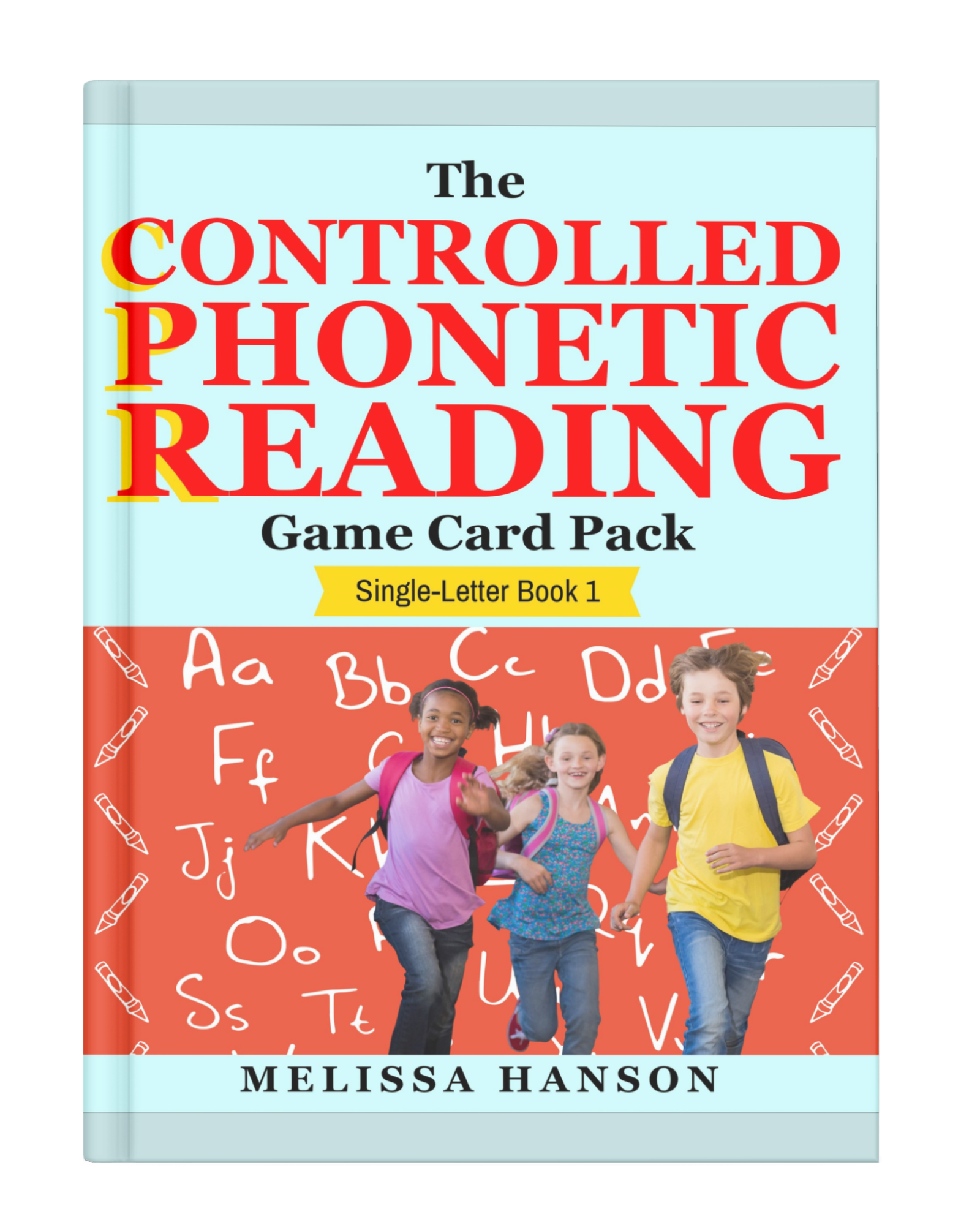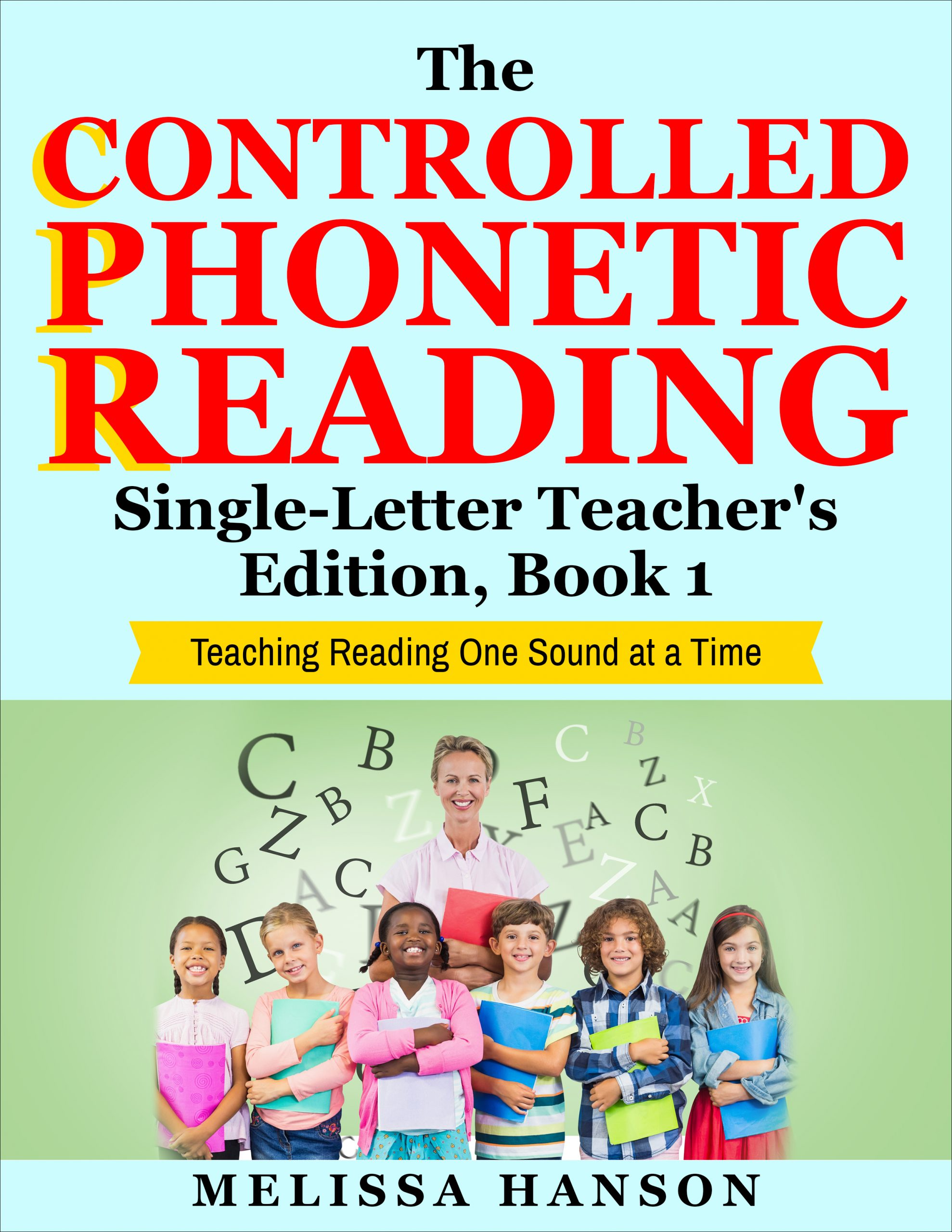
The Controlled Phonetic Reading Program is a research-backed, Orton-Gillingham–inspired program that makes learning to read fun, strengthens decoding skills, and lets students proudly read their first story after mastering only three sounds!
Children begin by learning just three letter phonograms, i, t, p, and immediately read their first fully decodable story. Each lesson adds only one new sound at an individualized, manageable pace until all 70 phonograms are mastered.
With only a few sounds, students begin blending—quickly discovering that they can read. This early success builds confidence and motivates them to keep progressing.
Every newly introduced sound unlocks another simple, fully decodable story that strengthens fluency, comprehension, and confidence—building steady reading success one sound at a time.
Read Our Top 10 Creative Products Reading Strategies

Your child learns to read through gentle, manageable steps. Each lesson introduces just one new phonogram, helping even struggling readers feel successful.

Students touch it, see it, hear it, and say it. CPR uses crafts, motions, games, songs, stories, flashcards, and large-muscle writing to reinforce every sound.
CPR was specifically designed for students who need repetition, structure, and clarity. The predictable system builds mastery, confidence, and joy in reading.

Simple, step-by-step instruction takes the guesswork out of teaching. Perfect for homeschool instruction, small reading groups, intervention, and tutoring.
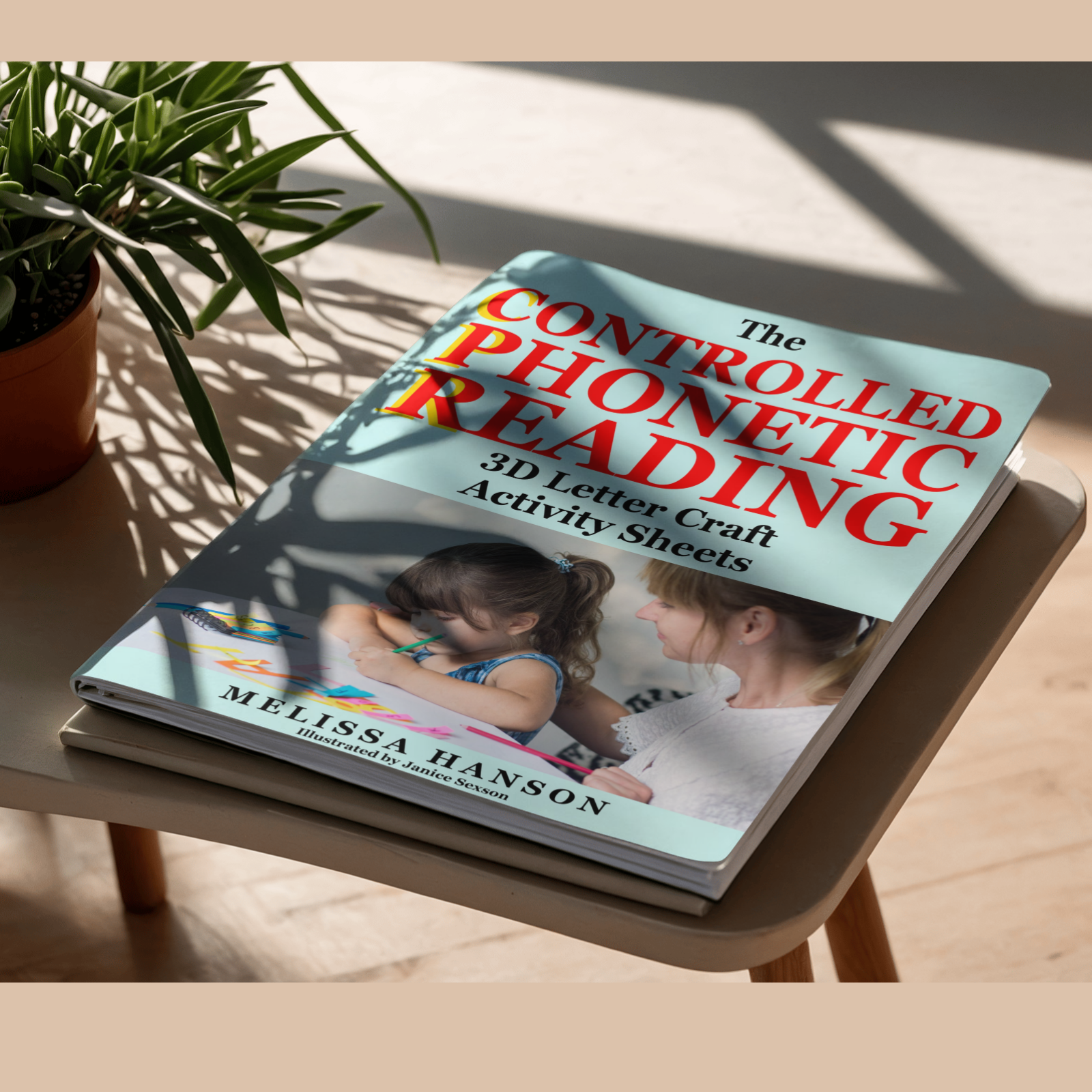
Make letter sounds unforgettable with 3D alphabet crafts! Use each page as a fun follow-up to a new sound and combine them to create an eye-popping alphabet book.
Subscribe to get your free 3D Letter Craft Workbook today.

Principal and K-1 teacher

I had a third grader who couldn’t read even simple three-letter words. With CPR, she finally broke through. This program succeeded where everything else failed.
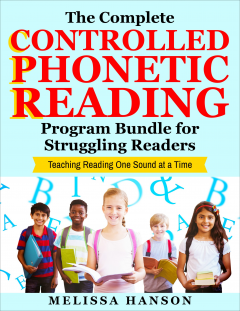
From building phonetic stories to multisensory games, flashcards, lesson guides, and full program bundles—our collection gives educators and parents everything needed to teach reading one sound at a time.
4.2
$25.99 - $39.99
$15.99 - $24.99
$49.99 - $69.99
$19.99 - $24.99
$15.99 - $29.99
4.5
$99.99 – $129.99
A gentle, confidence-building reading program for early learners.
Many children struggle not because they can’t learn, but because they need a slower, systematic, structured introduction to reading. This program is built exactly for them.
Children who are just beginning to explore letter sounds
Kids who learn best with hands-on, multisensory activities
Reluctant readers who feel overwhelmed with traditional methods
Parents and teachers who want a simple, proven plan to follow
There are many common misconceptions about dyslexia in which parents, teachers, and students need to be aware. Early screening and intervention is important in ensuring the success of a dyslexic student in the classroom.
Dyslexia is a learning disability that makes reading difficult. It affects word decoding skills, spelling, writing, and reading fluency. It also can inhibit reading comprehension, which can lead to trouble in nearly all school subjects.
Reversed letters/Vision Problems. Dyslexic students see letters backwards or flipped upside down which can be treated with colored lenses or overlays
Students with dyslexia have difficulty with phonemic awareness (the ability to identify and manipulate sounds).
Waiting or More Practice will help. Students with dyslexia will naturally improve in their reading if given more practice and more time to mature.
Longitudinal studies show that of those children who are reading disabled in 3rd grade, 74% continue to read significantly below grade level in the 9th grade.
Medication and Brain Training Work. Medication can cure dyslexia. Brain training alone can improve reading.
There is no medication that can cure dyslexia. Instead, it is used for attention-disorders. Cognitive training without an effective reading program does not improve reading outcomes.
Approximately 1 in 5 students suffer from dyslexia worldwide, it is a common neurological disability
- https://dyslexia.yale.edu/dyslexia/dyslexia-faq/
Get instant insights into a student’s phonemic awareness, decoding skills, and reading preparedness.
This quick assessment helps teachers identify exactly where a child needs support.
You don’t have to figure this out alone. Our program includes simple tools that make teaching easy — whether at home or in the classroom.

Short, practical teaching guides

Demonstration videos

Step-by-step lesson routines

Tips for supporting slower or anxious learners

Bring a proven, structured phonetic reading system into your home or classroom. Whether you’re teaching one student or an entire group, our program gives you everything you need for measurable success.
Because of the documented reading growth reported by teachers that have used the Controlled Phonetic Reading Program, the Southwestern Union has chosen to purchase this resource for all sixty of its elementary schools.